 ️
️
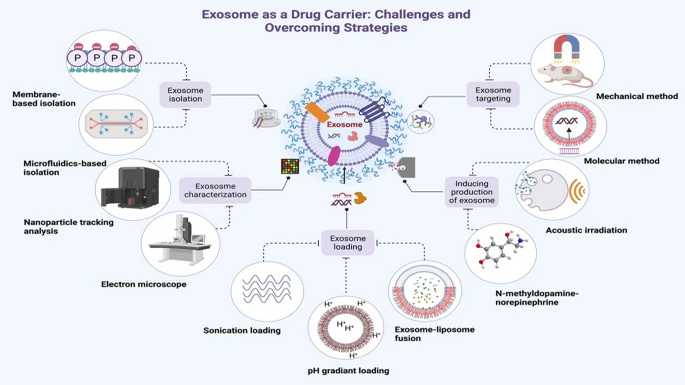
Challenges and Standardization in Extracellular Vesicle Research
Despite their considerable diagnostic promise, the clinical translation of extracellular vesicle (EV)–based technologies remains constrained by substantial pre-analytical and analytical challenges. These barriers currently limit robustness, reproducibility, and regulatory acceptance across clinical and translational research settings.
Detection Sensitivity and Specificity
A central limitation of EV-based liquid biopsy is the classical “needle-in-a-haystack” problem. Tumor-derived EVs (tdEVs) circulate at extremely low abundance within a vast background of vesicles released by hematopoietic, endothelial, and other non-malignant cells. Many existing analytical platforms lack the sensitivity required to reliably detect and quantify these rare vesicles, increasing the likelihood of false-negative results.
Specificity poses an equally significant challenge. Tumor-derived and physiological EVs share overlapping physicochemical characteristics, including size, density, and membrane composition. As a result, confidently distinguishing disease-associated cargo from the normal vesicular milieu remains analytically complex. This overlap complicates biomarker validation and undermines confidence in clinical readouts.
Methodological Variability and Lack of Standardization
At present, no universally accepted “gold standard” exists for EV isolation. Investigators must therefore navigate inherent trade-offs between yield, purity, scalability, and functional preservation, depending on the chosen methodology.
Ultracentrifugation (UC), historically the most widely used approach, offers broad applicability but is prone to vesicle aggregation and co-isolation of non-vesicular proteins. Size-exclusion chromatography (SEC) provides superior purity and preserves vesicle functionality, yet often suffers from reduced recovery and sample dilution. Precipitation-based methods enable high throughput and robust yields, making them attractive for large cohorts, but are frequently confounded by significant contamination from plasma proteins and lipoproteins.
This methodological heterogeneity complicates cross-study comparison and significantly impairs reproducibility. Numerous reviews identify the absence of standardized, validated workflows as the primary obstacle to regulatory approval and clinical adoption.
Regulatory and Community Efforts Toward Standardization
In response to these challenges, the International Society for Extracellular Vesicles (ISEV) has issued updated guidance through the MISEV2023 position statement. These guidelines emphasize the use of operationally defined terminology—such as “extracellular vesicles” or “small EVs” rather than “exosomes,” unless endosomal biogenesis is experimentally demonstrated. MISEV2023 also promotes transparent reporting of experimental parameters via the EV-TRACK knowledgebase to improve reproducibility and accountability across laboratories.
The establishment of validated, reproducible EV workflows that meet minimum characterization requirements (e.g., nanoparticle tracking analysis and immunoblotting for canonical markers such as CD63 and CD81) is increasingly viewed as a prerequisite for Clinical Laboratory Improvement Amendments (CLIA)–compliant implementation.
Implications for Clinical and Translational Research
From a clinical research perspective, the choice of EV isolation strategy should be dictated by the downstream application. For biomarker discovery, high-purity approaches such as SEC or density gradient separation are generally preferred to ensure that identified RNA or protein signatures are truly vesicular rather than derived from co-isolated serum components. In contrast, high-throughput diagnostic applications are more likely to rely on automated microfluidic platforms or precipitation-based workflows, typically coupled with additional clean-up steps, to accommodate clinical laboratory constraints.
Across all methodologies, EV isolation inherently involves a trade-off between recovery and specificity. Optimizing this balance remains a central technical challenge and a key determinant of clinical utility.
Outlook: The Path to Clinical Utility
Extracellular vesicles have transitioned from being regarded as cellular debris to occupying a central role in translational oncology. By carrying nucleic acids, proteins, and other bioactive cargo reflective of their parent cells, EVs provide a dynamic and minimally invasive window into tumor heterogeneity and the evolving tumor microenvironment.
The long-term objective in oncology is to harness EVs as next-generation liquid biopsies capable of enabling early cancer detection, longitudinal disease monitoring, and minimal residual disease assessment. While early clinical data are encouraging, successful translation will depend on addressing the intertwined challenges of sensitivity, specificity, and standardization. If these hurdles can be overcome, EV-based diagnostics have the potential to outperform current screening modalities and redefine non-invasive cancer diagnostics.